Evaluating Watermelon Sugar: A Practical Guide to Using This Joyful Display Font
Selecting the right typography for a design project is rarely about finding the single "best" font; it is about finding the one that best communicates the intended emotion and function. In the realm of display typefaces, Watermelon Sugar has emerged as a distinctive choice for designers seeking a specific aesthetic—one that balances playful energy with structural clarity. This font is not merely decorative; it is a tool designed to inject personality into headlines, branding, and creative compositions.
For professionals aged 20 to 50 who navigate complex design decisions daily, understanding the nuances of a typeface like Watermelon Sugar requires looking beyond its visual appeal. It involves evaluating its technical specifications, such as its PUA encoding, its versatility across different media, and how it compares to other joyful or retro-inspired display fonts. This article provides a comprehensive evaluation of Watermelon Sugar, helping you determine if it fits your current project needs or if an alternative style might serve your goals better.
Understanding the Core Characteristics of Watermelon Sugar
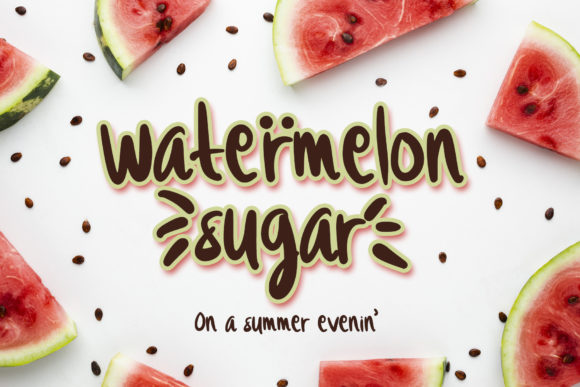
At first glance, Watermelon Sugar presents itself as a vibrant, hand-drawn inspired display font. The name suggests a connection to summer, freshness, and nostalgia, which is reflected in its glyph shapes. The strokes are generally rounded, avoiding sharp, aggressive angles, which creates an immediate sense of approachability and warmth. However, beneath this friendly exterior lies a robust technical foundation that makes it suitable for professional use.
The most significant technical advantage of Watermelon Sugar is its PUA (Private Use Area) encoding. To understand why this matters, one must look at how modern fonts handle special characters. Standard Unicode encoding assigns codes to common letters, numbers, and punctuation. However, many display fonts include extensive sets of swashes, alternate glyphs, ligatures, and decorative elements that exceed standard allocation. By utilizing the PUA space, the designer of Watermelon Sugar ensures that every available variation—from elegant flourishes to quirky accents—is accessible without requiring complex plugin installations or third-party tools.
This accessibility changes the workflow for designers. Instead of hunting for separate files or struggling with limited character sets, users can access all glyphs directly through their keyboard shortcuts or font panel features. This ease of access reduces friction in the creative process, allowing the focus to remain on composition rather than technical troubleshooting. For projects requiring frequent updates or rapid iteration, this efficiency is a substantial benefit.
Visual Identity and Emotional Resonance
Typography is inherently emotional. The curves and weights of Watermelon Sugar evoke a sense of joy and spontaneity. It performs exceptionally well in contexts where the brand voice is informal, energetic, or youthful. Consider a bakery advertising fresh pastries, a music festival poster, or a children’s educational app. In these scenarios, the font acts as a visual cue, setting expectations before the user even reads the text.
However, this strength is also its primary limitation. The very qualities that make Watermelon Sugar stand out—its high contrast, decorative nature, and informal tone—make it unsuitable for serious, corporate, or minimalist designs. It demands attention. If your goal is subtlety or authority, this font will likely work against you. Understanding this dichotomy is crucial for making an informed decision.
Comparative Analysis: Where Does Watermelon Sugar Fit?
When evaluating display fonts, it is helpful to categorize them by style and application. Watermelon Sugar sits comfortably within the "hand-lettered" or "brush script" category, but it distinguishes itself through its structured readability and extensive glyph set. Let us explore how it compares to broader categories of display typography.
Display Fonts vs. Body Text Fonts
A common mistake among novice designers is using a display font like Watermelon Sugar for long-form content. While it may be tempting to maintain brand consistency, doing so compromises legibility. Display fonts are designed for short bursts of text—titles, headers, logos, and call-to-action buttons. They rely on unique shapes to capture interest, which often sacrifices the uniformity required for easy reading over multiple paragraphs.
In contrast, body text fonts prioritize neutrality and rhythm. When pairing Watermelon Sugar with other typefaces, the strategy should be complementary rather than identical. A clean, geometric sans-serif or a classic serif can provide a stable foundation that allows the whimsical nature of Watermelon Sugar to shine without creating visual chaos. This pairing technique is essential for maintaining hierarchy and guiding the viewer’s eye through the design.
PUA Encoded Fonts vs. Standard Unicode Fonts
Not all decorative fonts offer the same level of customization. Many budget-friendly or basic display fonts rely solely on standard Unicode characters, limiting the user to the default alphabet and number set. While functional, these fonts lack the flair needed for high-impact design. Watermelon Sugar’s PUA encoding places it in a higher tier of utility for professional designers.
Consider the difference in output quality. A standard font might require you to manually insert images or use graphic design software to create a flourish. With Watermelon Sugar, you can type a word and simply swap a letter for its swash variant using a keyboard shortcut. This capability allows for rapid prototyping and experimentation, enabling designers to test multiple variations of a headline in minutes rather than hours. For agencies working under tight deadlines, this feature alone can justify the selection of the font.
Strengths and Tradeoffs in Real-World Applications
No tool is perfect, and Watermelon Sugar is no exception. A balanced evaluation requires acknowledging both its capabilities and its constraints. Below is a breakdown of key factors to consider when deciding whether to incorporate this font into your workflow.
- High Impact Headlines: Watermelon Sugar excels at grabbing attention. Its distinct shape ensures that headlines stand out in crowded digital environments, such as social media feeds or email marketing campaigns.
- Versatile Swash Library: The inclusion of numerous swashes and alternates allows for unique customization. You can avoid the "cookie-cutter" look that plagues many designs by mixing and matching glyphs to create bespoke typography.
- Limited Legibility Range: As noted, this font is not suitable for body copy. Attempting to read large blocks of text in Watermelon Sugar causes eye strain and reduces comprehension. It must be used sparingly and strategically.
- Niche Aesthetic: The joyful, retro vibe may clash with brands aiming for sophistication, luxury, or technological innovation. It is best suited for lifestyle, food, entertainment, and creative industries.
- File Size and Performance: Fonts with extensive PUA encodings can sometimes have larger file sizes due to the volume of included glyphs. While usually negligible for web use, it is worth considering if performance optimization is a critical priority for your project.
Decision Factors: When to Choose Watermelon Sugar
Choosing a typeface is ultimately a strategic decision based on your audience and objectives. Watermelon Sugar is the right choice when your primary goal is to evoke happiness, nostalgia, or creativity. It is particularly effective in:
- Brand Identity for Lifestyle Products: If you are launching a line of organic snacks, summer apparel, or artisanal beverages, the font aligns with the natural, unpretentious values of these products.
- Event Marketing: Concerts, festivals, and community events benefit from the energetic feel of the font. It signals that the event is fun, accessible, and engaging.
- Social Media Graphics: In platforms driven by visual immediacy, such as Instagram or Pinterest, Watermelon Sugar helps posts stand out in a scroll-heavy environment. Its bold shapes translate well to small screens.
Conversely, you should seek alternatives if your project requires:
- Corporate Authority: Financial institutions, legal firms, and healthcare providers typically require typefaces that convey trust, stability, and clarity. Watermelon Sugar’s informality undermines these attributes.
- Minimalist Design: If your design philosophy leans towards "less is more," the decorative nature of Watermelon Sugar may introduce unnecessary visual noise. A simple sans-serif or slab serif would likely serve the design intent more effectively.
- International Accessibility: While PUA encoding offers variety, it does not necessarily improve language support. Ensure the font includes the necessary diacritics and characters for your target languages before committing to it for global campaigns.
Practical Tips for Implementation
To get the most out of Watermelon Sugar, consider these practical tips during the design phase. First, experiment with spacing. Display fonts often benefit from increased letter-spacing (tracking) to enhance readability and give the design a more premium feel. Second, limit the color palette. Since the font itself is visually busy, using it with too many colors can result in a cluttered appearance. Stick to high-contrast combinations, such as black text on a white background or a deep blue on cream, to let the typography speak for itself.
Finally, always test your font choices across different devices and resolutions. A font that looks stunning on a high-resolution desktop monitor may lose some of its detail on mobile screens. Watermelon Sugar’s rounded edges generally scale well, but checking kerning pairs on smaller viewports ensures that the message remains clear regardless of how the user accesses your content.
Conclusion on Utility and Style
Watermelon Sugar is more than just a pretty face; it is a functional, well-engineered display font that offers designers significant creative freedom through its PUA encoding. It shines in contexts that demand joy, energy, and distinctiveness. However, its power comes with the responsibility of knowing when to use it—and when to step aside. By understanding its strengths, limitations, and ideal use cases, you can integrate Watermelon Sugar into your toolkit with confidence, ensuring that every project it touches stands out for the right reasons.